
Main Street Writes Discussion Topic – Originally presented 6/22/2026
Have you ever read a story where the protagonist escapes a hopeless situation because something incredibly convenient happens at exactly the right moment?
A stranger appears. A secret passage opens. Someone discovers precisely the information needed to solve the problem.
Sometimes these moments work.
But other times, they leave us feeling that the author has simply rescued the character.
The difference often comes down to coincidence versus causality.
Coincidence occurs when events happen together without a meaningful cause-and-effect relationship.
Causality occurs when one event leads naturally to another.
And in storytelling, that distinction matters.
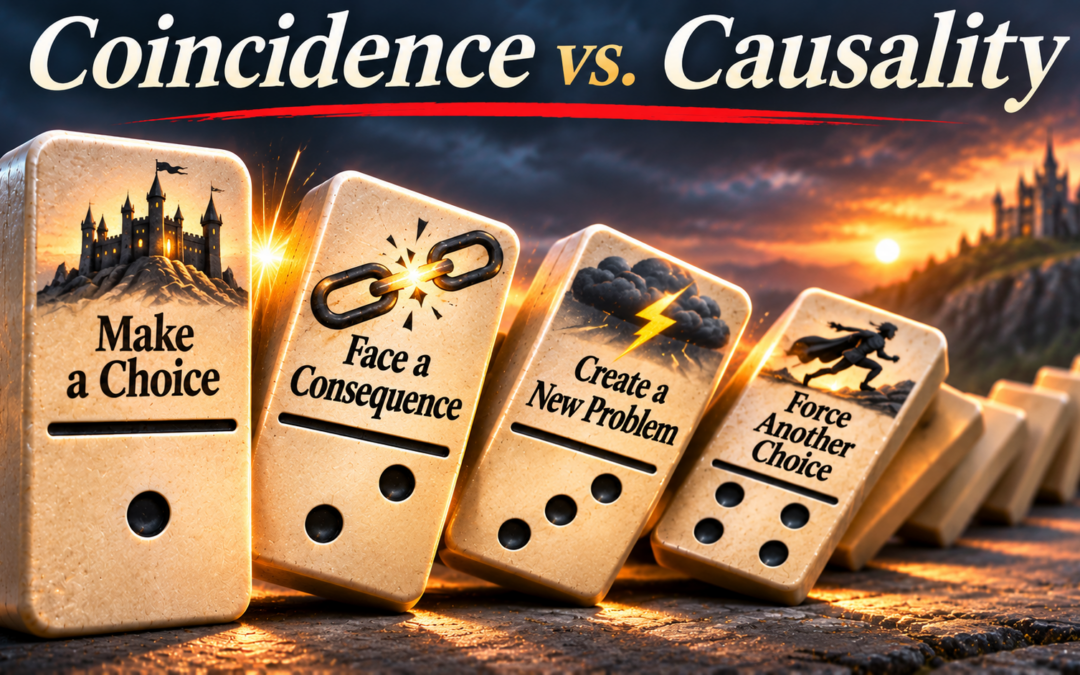
Coincidence can start a story. Causality should drive it forward.
The Difference Between “And Then” and “Therefore”
The creators of South Park, Trey Parker and Matt Stone, have described a useful test for story structure.
When connecting major story events, try replacing “And then” with “But” or “Therefore.”
Consider this sequence:
A hero discovers a treasure map.
And then pirates attack.
And then a storm strikes.
And then the hero reaches a mysterious island.
We have plenty of events, but they don’t necessarily feel connected.
Now consider:
A hero discovers a treasure map.
Therefore, pirates begin hunting him.
But he refuses to surrender the map.
Therefore, the pirates destroy his ship.
But he escapes with the map.
Therefore, he washes ashore on an unfamiliar island.
Now the events form a chain.
Each development grows out of what happened before it.
And here’s the important distinction: we’re not literally replacing words in our manuscripts.
“But” and “Therefore” are diagnostic tools, not writing requirements.
They help us determine whether our plot is progressing through cause and effect.
Jurassic Park: When Decisions Create Disaster
Think about Jurassic Park.
John Hammond creates a theme park filled with living dinosaurs.
That extraordinary achievement requires elaborate security systems.
But Dennis Nedry agrees to steal dinosaur embryos.
To accomplish his theft, he disables critical security systems.
As a result, the park’s defenses fail, dinosaurs escape, and the visitors are placed in mortal danger.
The disaster isn’t simply a random collection of unfortunate events.
It develops from human decisions.
Nedry’s greed and Hammond’s misplaced confidence in the park’s safeguards help create the catastrophe.
The characters’ choices generate the problems they must confront.
That’s causality at work.
When Character Flaws Drive the Plot
Not all cause-and-effect relationships involve physical actions.
Some of the strongest plots emerge from a character’s personality.
Consider Walter White in Breaking Bad.
His cancer diagnosis creates the circumstances that initially lead him into manufacturing methamphetamine.
But the story doesn’t simply become a series of unrelated criminal adventures.
Walter’s pride, ambition, and desire for control increasingly influence his decisions.
His choices create enemies.
Those enemies create new threats.
And Walter responds with increasingly ruthless behavior.
The consequences accumulate because of who Walter is and the decisions he makes.
We’ve discussed this before in Flaws That Drive Plot.
A character flaw becomes particularly powerful when it doesn’t merely describe the protagonist.
It actually creates the story.
The Convenient Escape Problem
Let’s look at a simple example.
A thief breaks into a castle to steal a magical crown.
Guards discover him, block the exits, and trap him inside the vault.
Suddenly, a hidden door opens in the wall.
The thief escapes.
The problem isn’t that the castle contains a secret passage.
The problem is that nothing the thief did contributed to his escape.
The author solved the problem for him.
Now imagine a different version.
Earlier in the story, the thief befriended an elderly servant who told him about forgotten passages beneath the castle.
He also noticed unusual markings along the walls.
Later, when the guards trap him, he remembers those clues and locates a concealed doorway.
The outcome is identical.
But now the escape feels earned.
The solution grows from something previously established—and from the protagonist’s own actions.
This also connects to our discussion of setups and payoffs: readers are more satisfied when earlier details become important later.
Is Coincidence Always Bad?
Not at all.
Coincidences happen in real life, and they can serve perfectly legitimate purposes in fiction.
An unexpected letter might reveal a mystery.
Two strangers might meet by chance.
A freak storm might strand our protagonist somewhere dangerous.
These events can launch a story or introduce interesting complications.
But readers tend to be less forgiving when coincidence conveniently resolves a conflict.
There’s a useful distinction:
Coincidence can create trouble. Character decisions should usually resolve it.
That isn’t an absolute rule. But it’s an excellent principle to keep in mind, especially when writing climactic moments.
Readers want to feel that the outcome was earned, even when it’s surprising.
A Quick Exercise
Take three significant plot points from your current work-in-progress.
Try connecting them using But or Therefore rather than And Then.
Ask yourself:
- What decision or event caused the next development?
- What consequences emerged from that decision?
- How did those consequences force the protagonist to make another choice?
If the events feel disconnected, consider whether one could grow more naturally from another.
Sometimes a small change can transform an entire sequence.
Closing Thought
The strongest stories don’t simply move from one event to another.
They develop through interconnected decisions and consequences.
A character makes a choice.
That choice creates a problem.
The problem forces another choice.
And the resulting consequences propel the story forward.
Coincidence may get your character into trouble. Causality makes their struggle—and their eventual success or failure—feel earned.
The next time you’re reviewing your plot, ask yourself one simple question:
Are these events happening because of one another, or are they merely happening one after another?
Your readers can usually feel the difference.
Related Discussions
- Every Scene Needs a Turn — Why meaningful changes keep scenes moving.
- Flaws That Drive Plot — How character weaknesses create consequences.
- The Lie the Character Believes — How false beliefs influence decisions and shape a story.
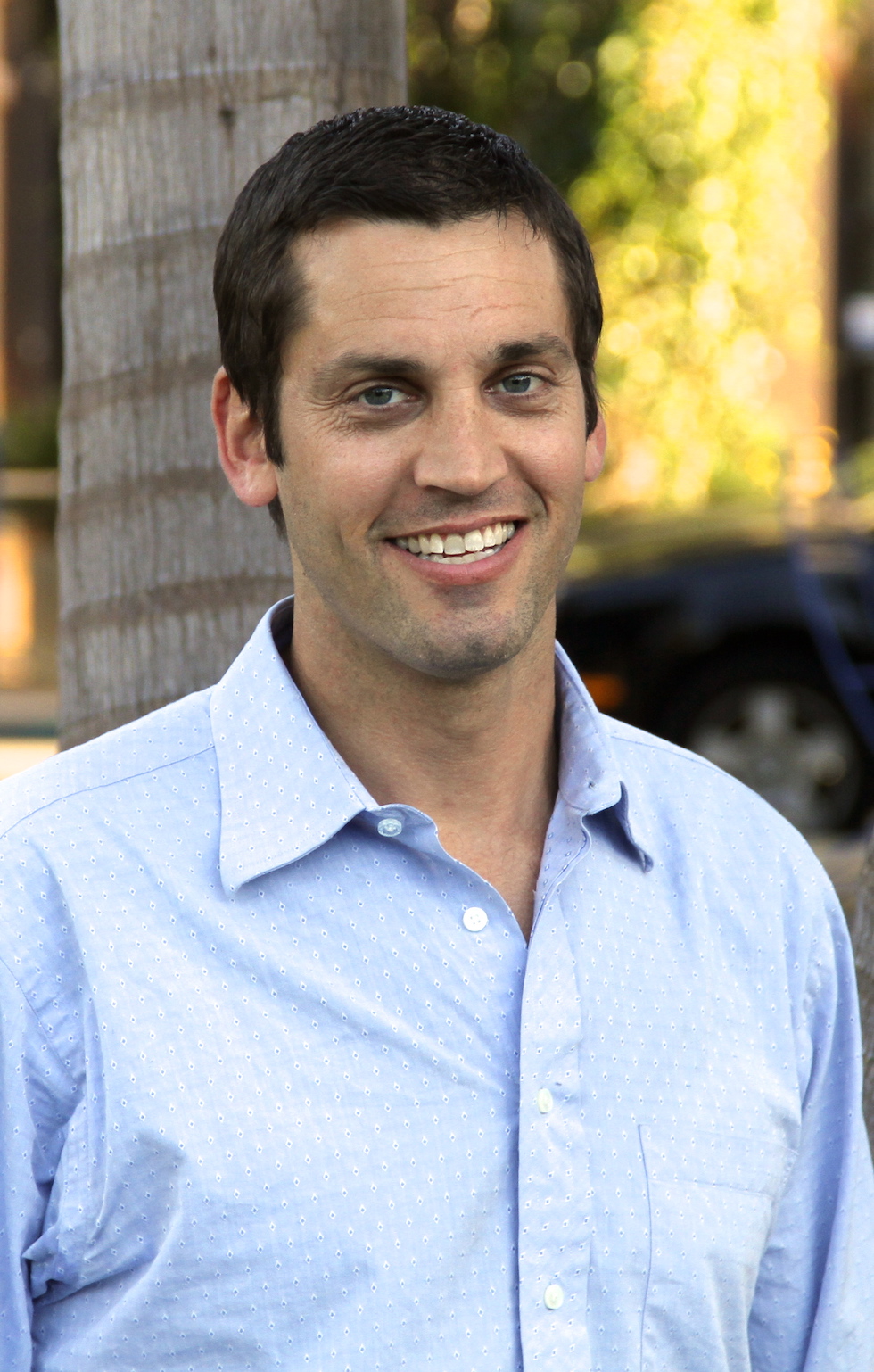 Scott Boyer grew up in Santa Monica, CA and still resides in the Los Angeles area. Graduating from the Haas School of Business at UC Berkeley in 1996, he started writing Bobby Ether And The Academy with the goal of blending YA fantasy with spiritual fiction. Nowadays, Scott splits his time between helping his father manage an insurance brokerage, playing with his Shepherd-mix rescue dog Patch, and writing other adventures in the Bobby Ether series.